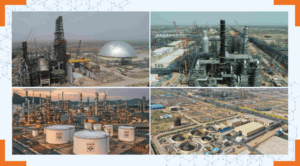
Founded on November 12, 1981, Ramkrishna Forgings Limited (RKFL) has become a global force in the metal forming industry. The company is renowned for supplying world-class forged, machined, and fabricated products to diverse sectors, including Automotive, Railways, Farm Equipment, Earth Moving, Mining & Construction, Oil & Gas, Power, and General Engineering. Backed by over 40 years of manufacturing excellence, RKFL is a powerhouse of engineering and technical know-how. Their continuous growth and success have been driven by upgrading processes, adopting best-in-class technologies, and a strong focus on talent management. (Source: https://ramkrishnaforgings.com/about-rkfl/)
Implementation of Industry 4.0
The scientific and industrial communities have shown immense interest in Industry 4.0 due to its capacity to revolutionize the manufacturing sector through digitalization and data-driven decision-making. However, implementing Industry 4.0 within complex, heavy industrial environments presents real-world obstacles that typically fall outside the scope of mainstream solutions.
RKFL embarked on an evolution from a state of limited digitalization to developing a digital intelligence platform. This platform leverages live data and machine learning models to enhance operations across a wide range of critical machines and assets. The core business objective was to enhance overall operational efficiency through real-time monitoring and seamless industrial automation.
Challenges Faced at the Site
Deploying a reliable communication network within a heavy forging plant comes with a unique set of harsh industrial environmental challenges:
- Severe Electro-Magnetic Interference (EMI) & RF Noise: The high-power heavy machines, induction heaters, and forging equipment generate immense electromagnetic noise. The existing Radio Frequency (RF) wireless communication network suffered from heavy interference, leading to frequent packet drops and unstable machine-to-machine connectivity.
- Aggressive Industrial Environment: Heavy dust, metallic particles, extreme ambient temperatures, and mechanical vibrations pose a continuous threat to standard networking hardware and physical layer cabling.
- Complex Physical Layout: Connecting multiple heavy engineering sheds separated by open areas required a robust, high-tensile outdoor physical backbone that could withstand harsh weather without compromising bandwidth or signal integrity.
- Zero Downtime Expectations: Critical SCADA (Supervisory Control and Data Acquisition) and CNC machine data streams require real-time transmission. Any data latency or dropped connection impacts machine uptime, production cycles, and operational efficiency.
The Derwiser Approach & Proposed Solution
To replace the unstable RF wireless communication and establish a future-ready network backbone, Derwiser’s technical experts analyzed the plant layout and environmental constraints. Derwiser proposed a hybrid structured cabling architecture blending ultra-reliable Single-Mode Fiber Optics with specialized Shielded Copper Solutions.
Strategic Engineering Framework:
- Shed-to-Shed Backbone Network: A high-speed, long-distance Optical Fiber Cable (OFC) network designed with special mechanical construction to ensure high tensile strength, longevity, and seamless inter-shed connectivity.
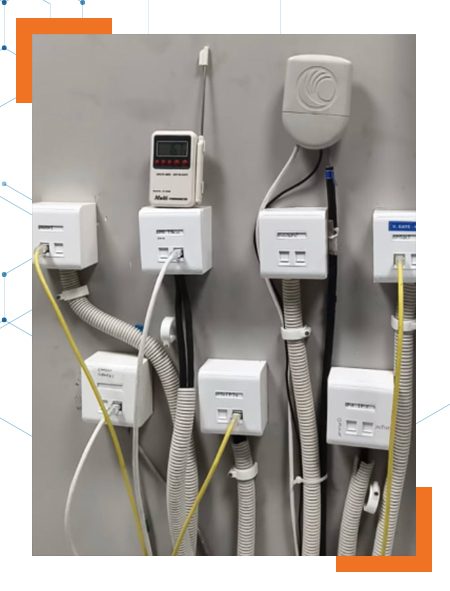
- Machine-to-Machine Connectivity: Implemented high-performance 1G copper solutions between the industrial machines to run critical operational data smoothly over IP protocols.
- Electromagnetic Protection: Deployed specialized Shielded copper solutions to drastically reduce local EMI (Electro-Magnetic Interference) and provide better signal headroom for high-frequency data streams.
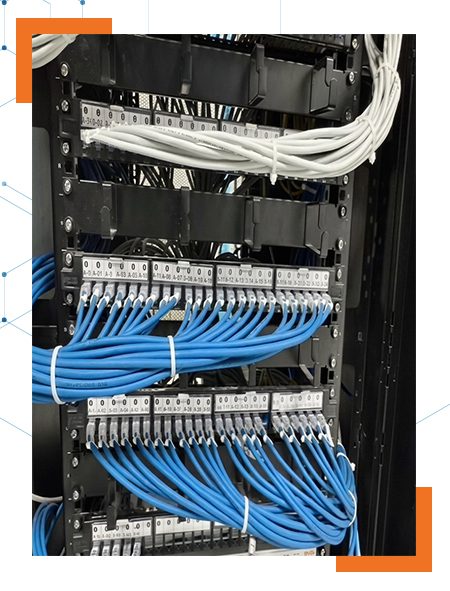
- Environmental Sealing: Ensured a dust-free environment at the Patch Panel port level to protect terminations from microscopic metallic dust and ensure continuous, uninterrupted data flow.
- Safety & Compliance: Supplied entirely RoHS-compliant products/solutions across the campus. Additionally, all deployed cables utilize Low-Smoke Zero-Halogen (LSZH) compounds, rigorously tested for Fire resistance, Acidity, and pH levels to guarantee a safe working environment.
Technical Components Deployed
- Application: SCADA-based Industrial Automation
- Connectivity: Shed-to-Shed Backbone Network
- Solution Type: OFC Single Mode, Cat-6 Structured Cabling
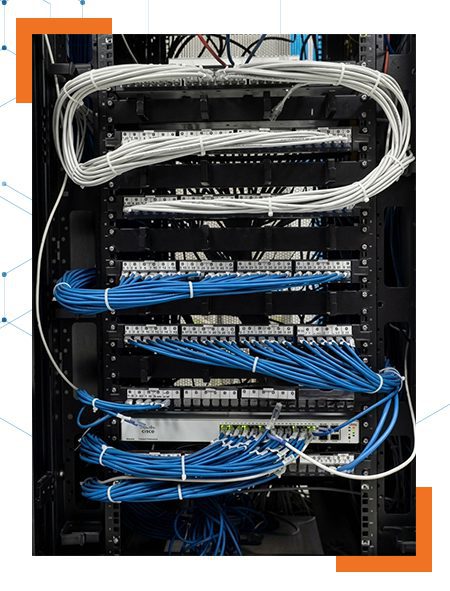
- Components Integrated: Specialized Industrial Cables, Light Interface Units (LIU), I/O Outlets, Patch Panels, Patch Cords
Results & Benefits
The transition from legacy RF wireless communication to Derwiser’s heavy-duty structured cabling solution delivered immediate operational improvements:
- Zero RF Interference: Achieved highly stable SCADA and CNC machine communication, completely isolated from surrounding heavy-machinery electrical noise.
- Maximized Machine Uptime: Improved machine uptime and overall operational efficiency across production lines due to reliable data logging.
- Consistent Cross-Shed Performance: Attained deterministic, uniform network performance across all scattered manufacturing sheds.
- Reduced Maintenance Overhead: Significantly cut down manual maintenance, troubleshooting, and diagnostic efforts previously caused by fluctuating wireless signals.
- Future-Ready Infrastructure: Established a reliable, long-term backbone physical layer capable of scaling up as more Industry 4.0 IoT applications are introduced.
Conclusion
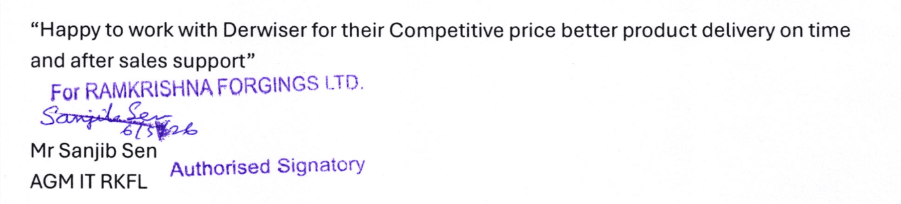
The successful implementation at M/S. Ramkrishna Forgings Limited stands as a testament to Derwiser’s customer-focused engineering philosophy. Every industrial site brings unique, rugged challenges mixed with high delivery expectations. By creating a tailor-made physical network infrastructure, Derwiser has successfully migrated RKFL’s critical operations from unstable RF channels to a robust, interference-free, and future-proof wired network backbone designed for the future of smart manufacturing.